If you are considering a custom home in Ascaya, you are not just picking a floor plan and waiting for the keys. You are making a series of high-impact decisions about land, design, approvals, and timing in one of Henderson’s most site-driven luxury communities. The good news is that when you understand the process from the start, you can move forward with more clarity and fewer surprises. Let’s dive in.
Why Ascaya Requires a Different Approach
Ascaya is designed as a true custom-home community, not a tract-home neighborhood. According to Ascaya’s custom homes overview, homesites vary widely by size, elevation, and topography, and buyers can pursue a fully custom path or explore Desert Design Study Homes for a faster route.
That difference matters from day one. In Ascaya, your lot influences what you can build, how your home will sit on the land, and how the final design connects to the mountainside setting. The community itself spans a 670-acre site with elevations from 1,900 to 3,200 feet, so each homesite comes with its own physical characteristics and planning considerations.
Start With the Lot, Not the House
One of the most common mistakes in a custom build is falling in love with a concept before you understand the site. In Ascaya, the homesite should come first because the land sets the parameters for building height, footprint, slope response, and even the kind of indoor-outdoor flow that may make sense.
Ascaya’s homesite information shows how different one lot can be from another. For example, current homesite details may include acreage, building envelope, elevation, and maximum building height, with some sites allowing two stories and others limited to one story.
What to Evaluate in a Homesite
When you compare lots in Ascaya, focus on both lifestyle goals and technical limits:
- View orientation
- Privacy from nearby homesites
- Building envelope size
- Allowed height and story count
- Slope and topography
- How the home will meet the land
This is why lot selection is both an aesthetic and planning decision. A beautiful view is important, but so is understanding what that specific homesite can realistically support.
Understand Ascaya’s Design Language
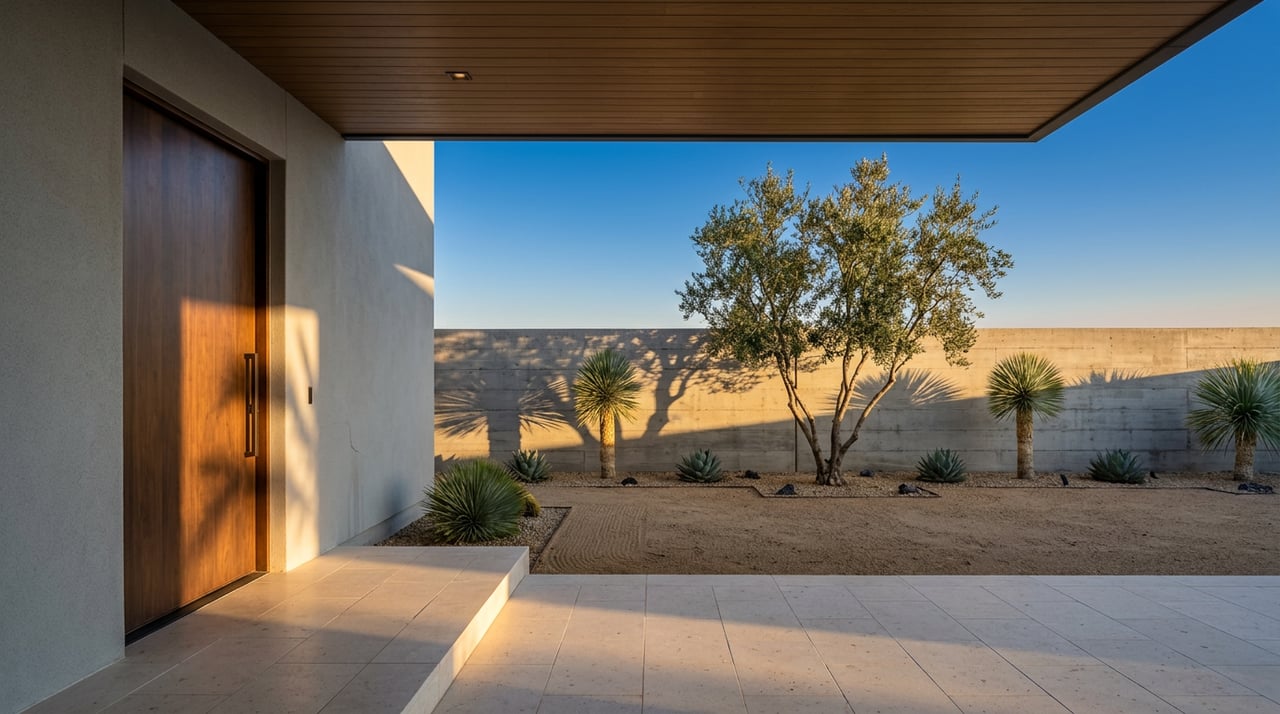
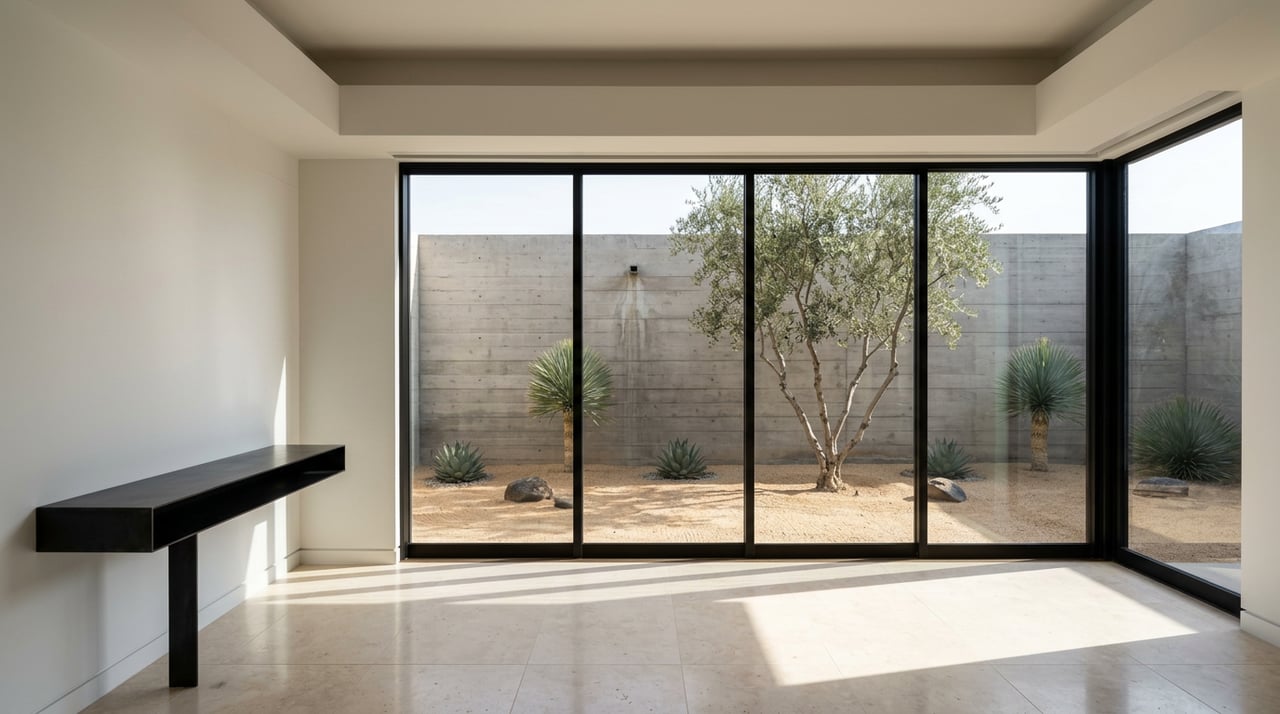
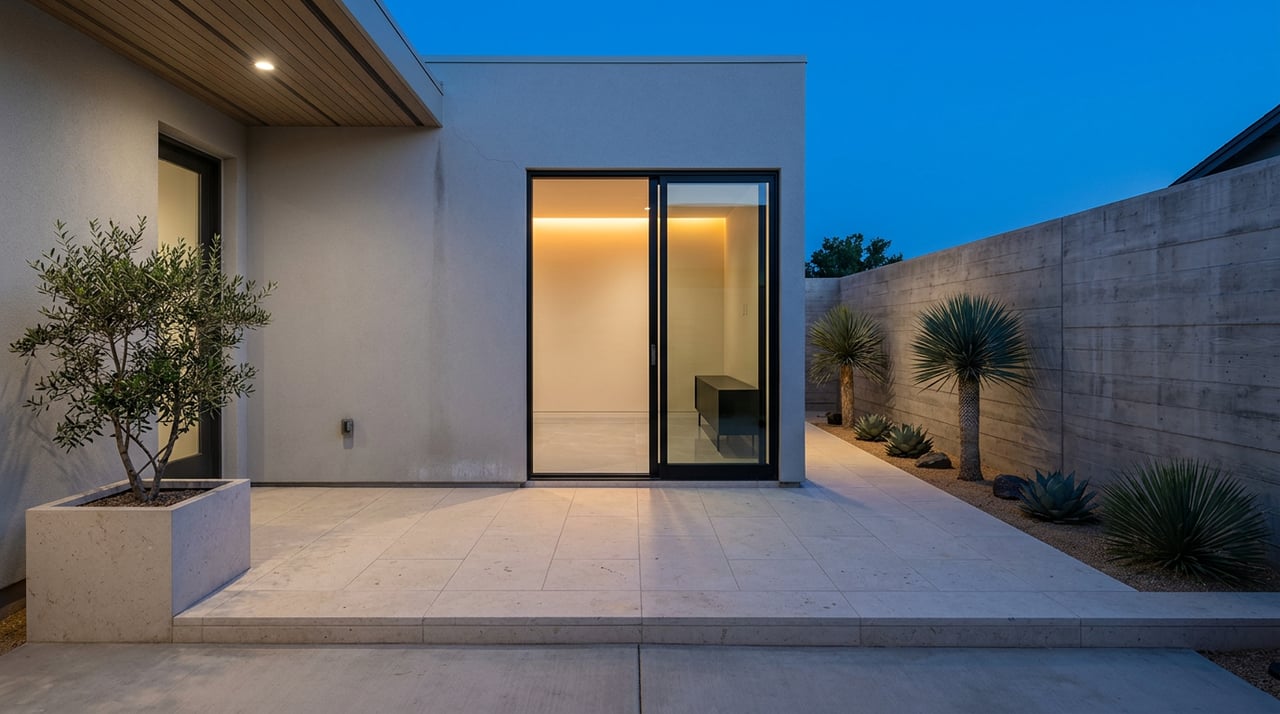
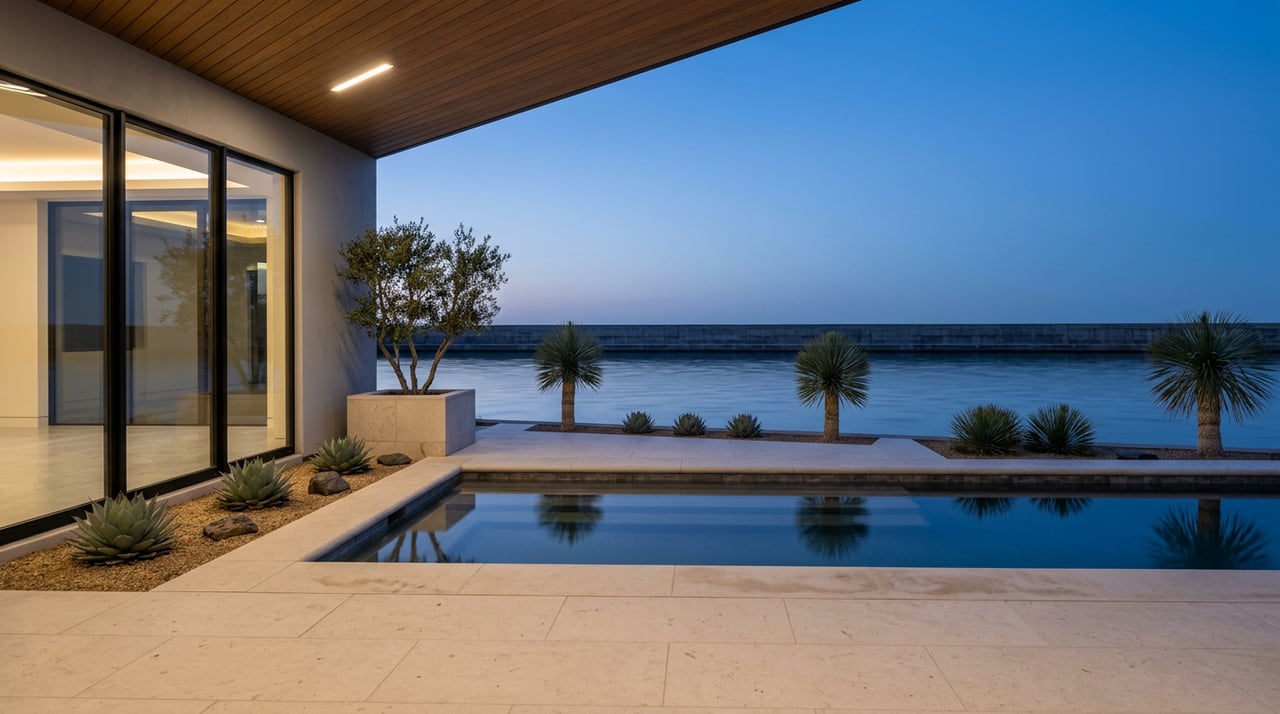
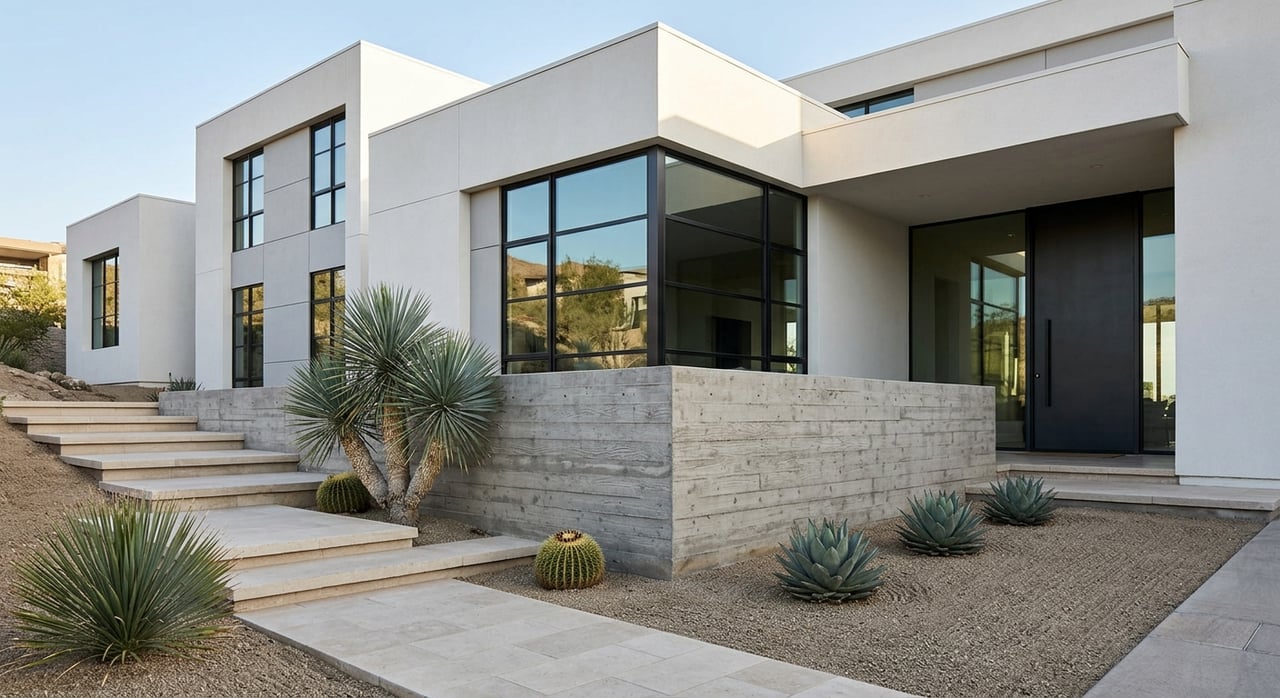
Ascaya has a clear architectural identity, but it is not cookie-cutter. The community’s architecture page describes a desert contemporary style shaped by earthy colors and textures, stone, wood, brushed steel, expansive glass, and strong indoor-outdoor living.
For you as a buyer, that means your home can still be highly personal while fitting within the broader visual character of the community. Ascaya’s public materials also describe the design framework as guidance rather than rigid repetition, which helps explain why the homes feel individualized while still connected to the setting.
What Desert Contemporary Means for Your Build
In practical terms, this style often influences:
- Material selections
- Rooflines and massing
- Window placement
- Exterior color palette
- Outdoor living design
- How the home blends into the natural terrain
This is one reason it helps to work with professionals who understand both hillside design and Ascaya’s overall aesthetic. The community lists a range of firms that have worked there, reinforcing the value of a team that knows how to design for the site, not just for square footage.
Build Your Team Early
A successful custom home rarely starts with construction. It starts with planning, collaboration, and early decision-making.
Ascaya’s own resources place real value on the pre-construction phase. In The Inspiration Room, owners can review materials, meet with architects and builders, and begin shaping ideas before plans are finalized. Ascaya has also highlighted workshops built to help buyers better understand financing, architect selection, pre-construction coordination, and communication across the project team.
Your Core Team May Include
- A real estate advisor familiar with Ascaya homesites and custom-build workflow
- An architect
- A builder
- Civil and grading professionals, depending on the lot
- Other design and engineering specialists as needed for the site
The earlier this team aligns, the smoother the process usually becomes. That is especially true in a community where hillside conditions, design review, and city approvals can all affect timing.
Budget Early and Decide Early
Custom homes offer flexibility, but flexibility without a plan can get expensive. Ascaya’s guidance on custom building notes that changes during construction can increase costs and delay the schedule, which is why major decisions are best made as early as possible.
That does not mean every finish must be chosen immediately. It does mean your core vision, layout priorities, and structural decisions should be thoughtfully established before construction begins.
Early Budget Discussions Should Cover
- Lot cost
- Design and consultant fees
- Construction budget
- Site-related work tied to slope or grading
- Permit and review timing
- Contingency planning for changes
When expectations are set early, you are in a better position to protect both your timeline and your investment.
Expect a Staged Approval Process
In Ascaya, the path from lot to finished estate is best understood as staged rather than perfectly linear. You choose the homesite, test the design against the envelope and terrain, assemble the right team, move through community and city review, and then begin construction.
On the city side, Henderson’s Development Services Center coordinates plan review, inspections, and permit services. The city accepts building and fire permits, civil plans, drainage studies, and related submissions through its online system.
Why Hillside Review Matters
For sloped lots, Henderson’s hillside requirements can be a major part of the process. The city’s development code states that lots in the H overlay district with slopes of 15 percent or greater require a Hillside Development Plan before approvals move forward.
That process can involve concept plan review, a site meeting with city staff, and technical submittals such as grading plans and drainage studies. In a mountainside community like Ascaya, this is an important reason your team should evaluate the lot carefully before your plans go too far.
Drainage and Grading Can Shape the Timeline
Depending on the homesite, floodplain review may also come into play. Henderson explains that a drainage study is the first step in its floodplain development permit process, after which civil improvement plans are submitted and building permits can be issued.
This is not meant to make the process sound intimidating. It simply means that homesites with more complex site conditions may require more coordination early on. In many cases, that work is what helps avoid costly surprises later.
A Helpful Detail for Custom Homeowners
Henderson’s open-space planning materials note that a single-family custom home does not require a Desert Lands Conservation Report or Master Conservation Plan, although the site plan still needs to identify conservation features that will be preserved. That is a useful distinction because it shows that not every layer of development review applies in the same way to a custom residence.
Build-Ready Does Not Mean One-Size-Fits-All
Older Ascaya materials describe homesites as build-ready with utilities pre-run, which is helpful for understanding the starting point. In other words, the process is generally less about bringing in basic infrastructure and more about matching the right design to the right lot.
That said, build-ready should not be confused with simple. A homesite can be ready for development and still require careful planning around envelope limits, grading response, and design compatibility.
What a Smart Custom Build Process Looks Like
If you want to simplify the journey, think of the process in this order:
- Choose the homesite based on both vision and constraints
- Confirm how the building envelope, elevation, and height limits affect design
- Assemble an experienced architect-builder-consultant team
- Align the concept with Ascaya’s desert contemporary character
- Prepare for city review, permitting, and any hillside or drainage requirements
- Make major decisions early to reduce change orders and delays
This approach helps you move from inspiration to execution with more confidence.
Why Representation Matters in Ascaya
In a community this nuanced, strong representation is about more than finding a lot. It is about helping you evaluate tradeoffs, understand the approval path, coordinate the right professionals, and keep the process moving with a clear strategy.
That is especially valuable when homesite facts, pricing, availability, and design details are subject to change. A well-informed advisor can help you interpret what is current, what is lot-specific, and what questions to ask before you commit.
If you are exploring a custom build in Ascaya and want a concierge-level approach from lot selection through the next steps, connect with Virtue Real Estate Group. You will have a team that understands luxury new construction, Henderson market dynamics, and the level of planning a custom estate deserves.
FAQs
What makes the custom build process in Ascaya different from other communities?
- Ascaya is a true custom-home community where homesites vary by size, elevation, topography, building envelope, and height limits, so the lot has a major impact on the design process.
What should you look at when choosing a homesite in Ascaya?
- You should review view orientation, privacy, building envelope, elevation, maximum building height, allowed story count, and slope-related site conditions.
What architectural style is common in Ascaya custom homes?
- Ascaya’s official design language is desert contemporary, with features such as natural textures, stone, wood, brushed steel, expansive glass, and indoor-outdoor living.
What city approvals may affect a custom home in Ascaya?
- Depending on the lot, the process may involve Henderson plan review, permitting, inspections, hillside review, grading plans, drainage studies, and possibly floodplain-related review.
What happens if your Ascaya lot has a steep slope?
- Under Henderson’s hillside rules, lots in the H overlay district with slopes of 15 percent or greater require a Hillside Development Plan before development approvals.
Why is early planning so important for an Ascaya custom build?
- Ascaya’s guidance notes that changes during construction can increase costs and delay the project, so it is smart to make major design and budget decisions early.
Are Ascaya homesites already prepared for construction?
- Older Ascaya materials describe the homesites as build-ready with utilities pre-run, but each lot still needs careful planning around site fit, grading, and design constraints.